
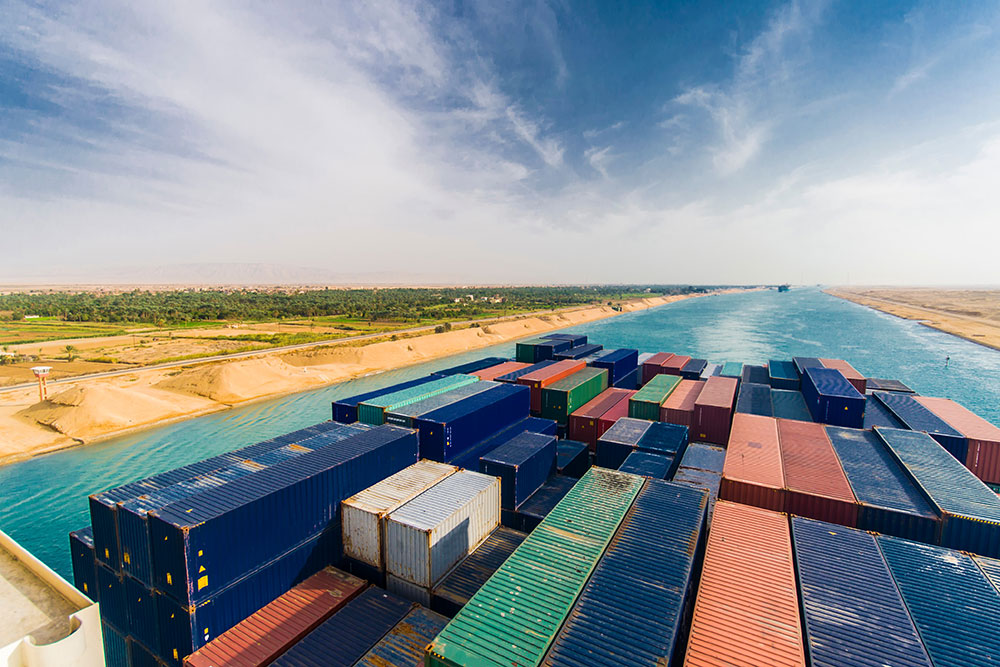
Some of the world’s largest container shipping lines are beginning to increase their use of the Suez Canal again, even though the security situation in the Red Sea remains highly uncertain.
The attraction is clear. Routing vessels between Asia and Europe via the Cape of Good Hope adds significant sailing time, fuel consumption and operating cost. A return to the Suez Canal can shorten voyages considerably, improve vessel utilisation and help carriers restore greater schedule efficiency.
There are now signs that confidence is beginning to return. Maersk has been progressively reintroducing Red Sea services, CMA CGM has increased its use of the route and MSC recently sent seven vessels through the Bab el-Mandeb Strait within a two-week period.
However, recent attacks underline just how fragile that recovery remains.
On 11 August, a Houthi attack on the Tihamah resulted in the deaths of four crew members and two rescuers. Days later, another unmanned cargo vessel was struck by multiple projectiles off Yemen and was subsequently declared a total loss.
Some operators are also changing the way they transit the region. Reports suggest that a growing number of Saudi oil cargoes are travelling through the Red Sea with AIS tracking switched off, making their movements more difficult to monitor.
The result is a complex picture. Commercial pressures are encouraging carriers back towards the shorter Suez route, but the security threat remains very real and could quickly reverse the current trend.
For now, any return is likely to remain cautious, selective and subject to rapid change.
Global Freight Services continues to monitor developments closely and will keep customers informed of any changes affecting routing, transit times or service reliability.