
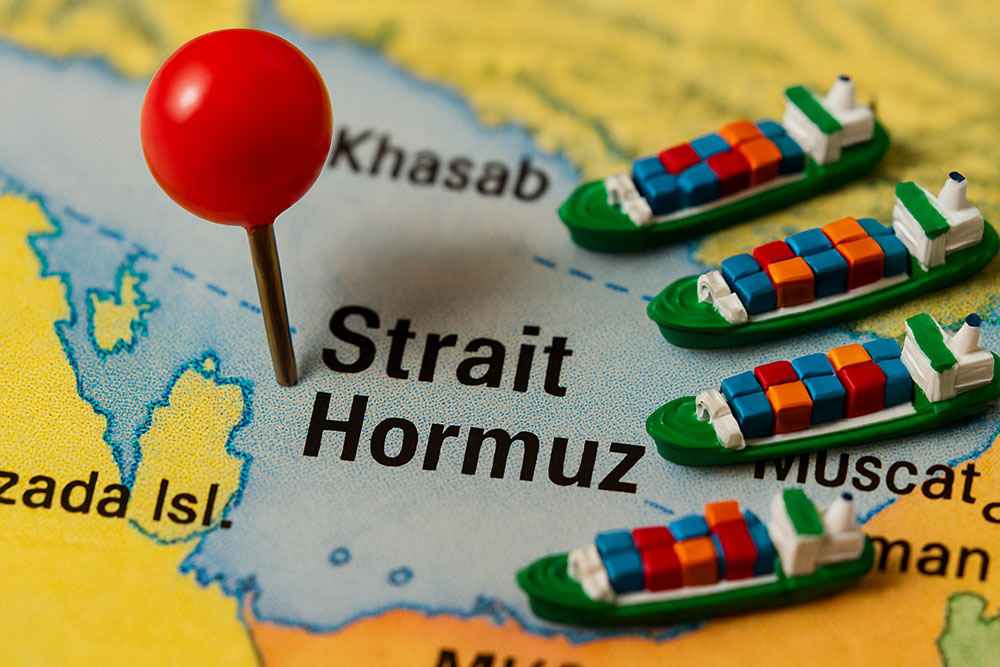
Despite recent claims from President Trump that serious negotiations are now taking place, tensions in the Gulf region continue to escalate as Iran moves to strengthen its control over the Strait of Hormuz.
This week, Iran announced a major expansion of the maritime zone surrounding the strategically critical waterway. Newly released maps outline an area covering approximately 8,800 square miles, extending into the territorial waters of both Oman and the UAE. The development has prompted growing concern among neighbouring states and carriers, who rely heavily on the route for global trade and energy transportation.
The announcement follows a recent confirmation from Tehran that it has established a new governing body, the Persian Gulf Strait Authority (PGSA), which has been tasked with overseeing transit through the Strait. According to Iranian officials, all vessel movements within the newly defined boundaries must now be coordinated directly with Iranian authorities.
Iran is also preparing to introduce a formal permit system for ships seeking passage through the Strait of Hormuz. Vessel operators are expected to receive official guidance by email outlining the rules and regulations for obtaining authorisation. In addition, draft legislation currently moving through the Iranian parliament proposes the introduction of restrictions on vessels linked to the United States or Israel.
Commercial shipping activity through the Strait remains significantly disrupted, with movements largely restricted to tankers and vessels operating under agreements with Tehran. Industry estimates suggest that more than 100 containerships remain stranded in the Persian Gulf, although ongoing GPS disruption continues to make tracking difficult.
Global Freight Services continues to monitor developments closely.