
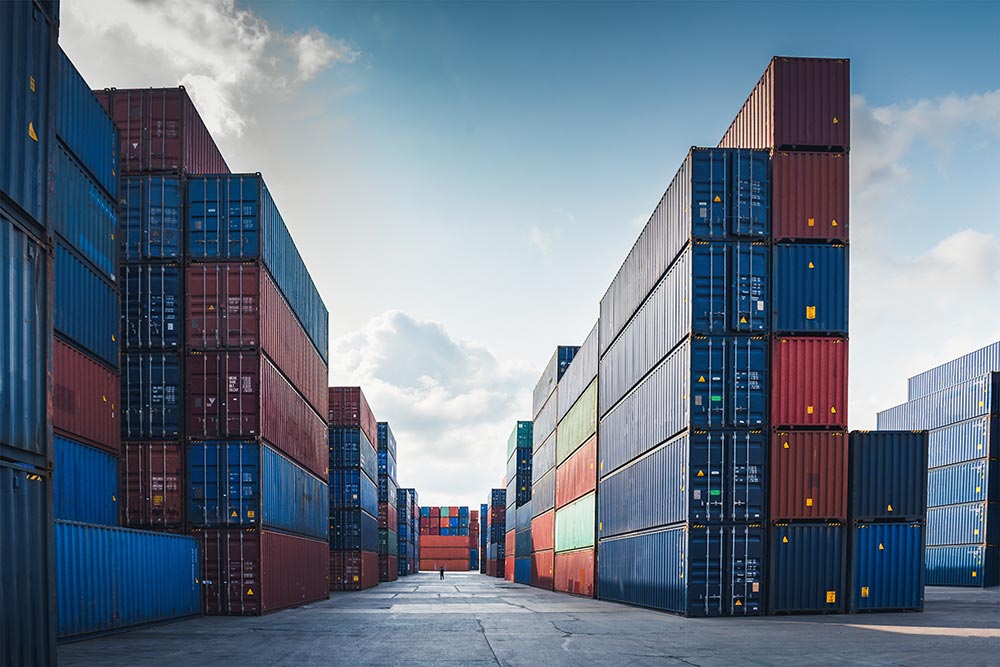
Severe congestion is continuing to affect container movements through China, with Shanghai, Ningbo, Yantian and Shekou among the gateways experiencing the greatest disruption.
Repeated storms and the seasonal increase in cargo volumes have created substantial backlogs across the country’s port network. Vessel bunching has left ships facing average waits of three to five days at several locations, while delays at Shanghai have occasionally been longer. Some carriers have consequently removed Shanghai calls from selected service loops.
Export operations are also being affected by restrictions at several terminals. Containers may only be accepted two or three days ahead of the scheduled vessel departure, leaving transport operators with limited delivery windows. Restricted equipment availability is adding to the operational pressure in some regions.
The disruption is contributing to extended transit times, rolled or short-shipped cargo, port omissions and schedule changes at short notice. The scale of the current backlogs means delays are expected to continue for some time, even after weather conditions and port productivity improve.
Globally, congestion is estimated to be absorbing around 1.7 million TEU of container vessel capacity at any one time. This represents approximately 5% of the total fleet, compared with a pre-pandemic level of around 2%.
Port workloads are being further intensified by ultra-large container vessels and the reduction of port calls on certain service loops. Terminals can now be required to discharge as many as 7,500 containers during a single call, compared with approximately 2,500 only a few years ago.
Global Freight Services is monitoring the situation closely with its partners across Asia. Customers are advised to book as early as possible and build additional lead time into their supply chain planning.